
Criminal Court Cases in Sterling County
Sterling County criminal cases divide among three local courts. The 51st District Court hears felonies, revocations, and other district criminal matters. The constitutional Sterling County Court handles Class A and Class B misdemeanors within its jurisdiction. The Sterling County Justice Court handles fine-only Class C and traffic matters, and it also performs magistration after arrest. That split matters at the first call. Asking only for a name, without naming the likely court level or year, can blur two indexes kept by the same office.
The combined County and District Clerk is the custodian for filed district and county criminal cases. The office is at 609 Fourth Street, Sterling City, TX 76951, receives mail at P.O. Box 55, and answers at 325-378-5191. Its fax is 325-378-3111. Call before traveling because stable counter hours are not posted and the county has announced occasional closures. The clerk preserves pleadings, dockets, judgments, and sentences. A court coordinator schedules settings; that coordinator does not replace the clerk for copies or record searches.
The official combined clerk page shows the local contact and fee links.

That county page points searchers to the one counter that can separate district felony files from county misdemeanor files.
Sterling County Court Index Split
One clerk does not mean one docket. A felony search should name the 51st District Court, while a jailable misdemeanor search should name the Sterling County Court. Fine-only matters belong with Justice Court. This is the local system’s most common routing trap. A missing result in one index can mean the request reached the wrong court, not that no case exists. Give the full name, approximate filing year, case number if known, and likely offense level. Ask staff to check both district and county criminal indexes when the level is uncertain.
Justice Court records must be treated as their own stream. The official Sterling County Justice Court page is the current source for its local contact.

The separate court page illustrates why a traffic or fine-only case should not be searched as a district felony docket.
Note: Sterling County publishes no local Odyssey-style public index, so direct clerk confirmation remains the best completeness check.
Sterling County Case Record Searches
Use a local-first search. The county does not publish electronic date-range coverage, a public terminal policy, or a stable copy price. Start with the clerk, identify the correct court, and ask for a docket sheet before ordering a whole file. The docket gives a compact list of filings and events, which lets the requester choose the indictment or information, plea papers, judgment, sentence, or another specific document. Ask whether the file is electronic, paper, or archived, and request the current plain-copy and certified-copy cost before authorizing work.
- Choose the likely court level: 51st District Court for a felony, Sterling County Court for a Class A or B misdemeanor, or Justice Court for a fine-only matter.
- Call the combined clerk with the full name, approximate year, case number if known, and court level. Ask whether staff can search the index.
- Request the docket sheet first. Use its event list to identify the charging paper, order, judgment, sentence, or other needed document.
- Try re:SearchTX as a supplement. Filter for Sterling County, court, case type, and date where those controls are available.
- Ask the clerk for inspection or delivery options, the current price, and certification when an official copy of the disposition is needed.
The statewide interface presents several ways to narrow a result, but a field can appear or behave differently based on the participating court and user role.
| Field or Control | Type | Required | Use |
|---|---|---|---|
| Search type | Tabs | Yes | Choose person, business, or case number where offered |
| First, middle, last name | Text | Search-dependent | Check spelling and broaden with care |
| Case number | Text | Alternate | Use the court-formatted identifier |
| Court or county | Filter | No | Select Sterling or the 51st District Court when available |
| Case type | Filter | No | Criminal coverage depends on the source court |
| Date range | Date filters | No | Narrow by filing or event date |
| Sort and view | Controls | No | Change result order and inspect the document list |
re:SearchTX and Sterling County Cases
re:SearchTX is a statewide e-filing document and case-data system, not a guaranteed complete criminal index for Sterling County. Public access depends on court participation, the document, and the user’s role. A result may offer metadata without every pleading, while a missing result may reflect local participation or older paper coverage. It cannot prove that no Sterling County criminal case exists. Use it to find a possible case number, court, filing date, or document list, then compare that result with the combined clerk’s index.
The official re:SearchTX interface is the source for current sign-in and search controls.
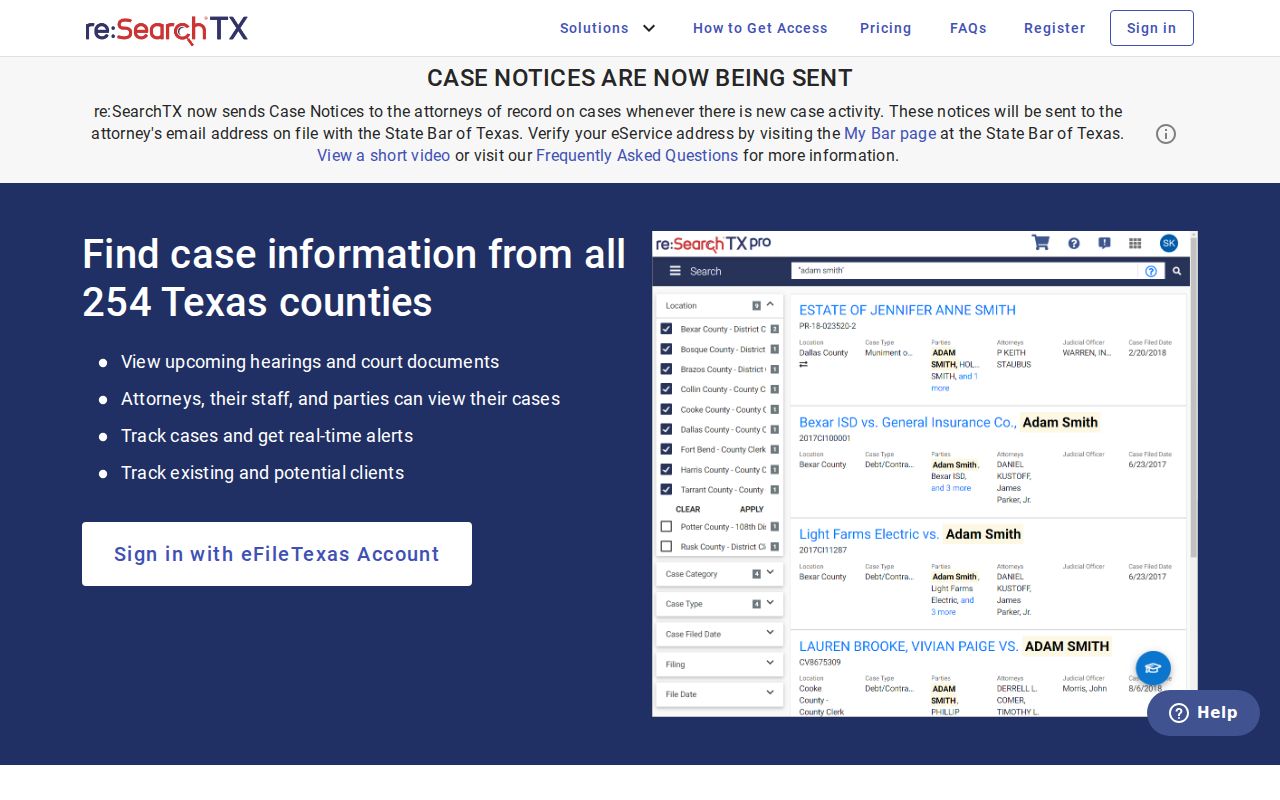
The portal image shows the statewide entry point, while the Sterling County clerk remains the final local check for coverage and copies.
What a Criminal Case File Contains
A court file records prosecution, not just custody. It can show what charge was actually filed after prosecutor review, which motions reached the judge, whether a plea or trial occurred, and how the case ended. Start with the docket sheet and the final judgment. Those two records often answer the main question without requiring every filing. A booking charge may be reduced, enhanced, amended, or declined, so the charging paper and judgment carry more weight than a jail label.
| Case number and court | Identifies the file, trial court, case type, filing date, and status. |
|---|---|
| Charging document | Shows the complaint, information, or indictment and the filed offense or degree. |
| Docket entries | Lists arraignment, motions, hearings, pleas, judgments, revocation steps, and appeal notices. |
| Party and counsel entries | Names the State as prosecutor and lists public counsel information when available. |
| Disposition and judgment | Records dismissal, acquittal, deferred adjudication, conviction, or another court result. |
| Sentence and ledger | May show custody or supervision terms, fines, costs, and payment status. |
Sensitive identifiers, protected victim details, sealed documents, juvenile files, expunged records, and nondisclosed criminal history may be withheld or redacted. Document download can also depend on access role or fee.
Sterling County Felony Court Records
Felony proceedings belong to the 51st District Court. Sterling settings occur at the county courthouse, but the court works regionally and its principal office is in San Angelo. The official Sterling page routes criminal scheduling to the court coordinator by email and requires messages to copy opposing counsel or a self-represented party. Scheduling and records remain separate jobs. Ask the coordinator about a setting; ask the combined clerk for the docket, pleading, judgment, or certified disposition.
The official 51st District Court page identifies the current court and criminal scheduling channel.

The regional court page clarifies who manages settings, while the Fourth Street clerk counter remains the criminal file custodian.
A Class A or B misdemeanor stays in Sterling County Court instead. A Class C matter belongs in Justice Court where jurisdiction lies. The filed information or indictment and final judgment are the best sources for offense class because enhancements and amendments can make an early arrest label stale.
Criminal Case Stages in Sterling County
A Sterling County felony commonly begins with arrest and Article 15.17 magistration. The prosecutor then reviews the arrest material. A felony usually proceeds through grand-jury indictment before arraignment, pretrial motion work, plea or trial, judgment, and sentence. County misdemeanors use a different charging route, but the docket still tracks filing, settings, plea or trial, and disposition. No fixed local time for each stage is published. Court schedules, investigation, counsel, motions, and the case’s facts can all change the pace.
Case flow: Charges Filed › Arraignment › Pretrial › Plea or Trial › Disposition › Sentencing
Read the docket by event date. An indictment states an accusation, not guilt. Deferred adjudication is not a final conviction, though it may remain public and reportable. A dismissal ends the filed charge without a conviction. An acquittal follows a not-guilty decision, while a conviction reflects an adjudication of guilt. The judgment, rather than a lone docket abbreviation, should settle the result.
Correcting Sterling County Case Outcomes
DPS assembles reported arrest, prosecution, and disposition events. Its record can lack a final Sterling County result when reporting is delayed or incomplete. If a public name search still shows an arrest without the correct outcome, obtain a certified judgment or disposition from the combined clerk. Then follow the Texas DPS Crime Records correction process. For a person reviewing their own identity-linked Texas history, fingerprint-based personal review is more reliable than a name match.
Compare identifiers with care. Common names and birth data can point to the wrong record, while a case number ties the court document to its Sterling County docket. A certified judgment does not itself erase a record. Expunction under Chapter 55A and an order of nondisclosure under Government Code Chapter 411 are separate remedies with distinct eligibility rules.
Note: A no-result search in re:SearchTX is not proof that the combined Sterling County clerk holds no criminal file.
Federal Cases Outside Sterling County
Federal prosecutions from Sterling County are not filed in the county clerk’s index. The county lies in the San Angelo Division of the U.S. District Court for the Northern District of Texas. PACER is the official federal docket and document system after account registration, and its current access fees and quarterly waiver threshold appear on the judiciary site. Federal records use their own case numbers and court files. They should not be expected in re:SearchTX or the Sterling County clerk’s local indexes.
The official PACER site provides the federal account and case-access route.
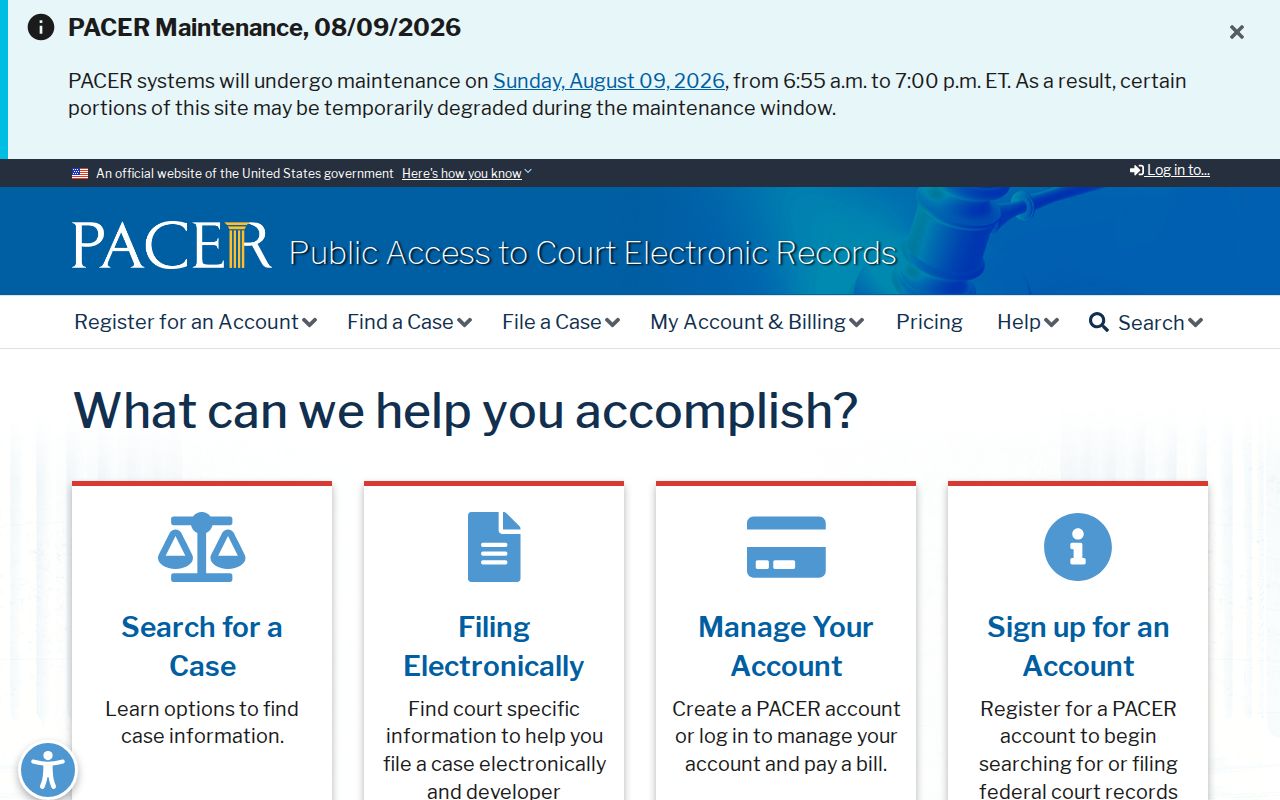
PACER fills the federal layer only; it does not replace the Sterling County court search for state felony or misdemeanor cases.
Access Rules for Case Records
Court files do not always follow the same Texas Public Information Act process as sheriff administrative records. Request pleadings, docket sheets, and judgments from the clerk that preserves the judicial file. Request an arrest or incident report from the agency that created it. Public court access can still exclude or redact juvenile matters, victim details, sensitive identifiers, sealed warrants, expunged records, and records subject to a nondisclosure order. Some electronically filed documents may not be visible to a public portal user even when a clerk can confirm the docket.
When a record does not appear online, contact the combined clerk and describe the court level, full name, approximate year, and case number if known. Ask whether the file is paper or archived and whether inspection is possible. Sterling County has not posted its plain or certified copy prices or electronic coverage dates, so obtain the current terms from the office before ordering.